
Most business communications happen quietly in the background.
Internal meetings.
Quick team calls.
Routine collaboration.
But some communications carry significantly more weight.

Investor earnings announcements.
Board meetings.
Legal proceedings.
Corporate town halls.
Investor roadshows.
Crisis communications.
Large virtual or hybrid events.
In these moments, communication isn’t simply about connecting participants — it’s about delivering a structured, professional experience where reliability matters and the audience expects everything to run smoothly.
These environments require more than just technology. They require planning, coordination, and experienced oversight behind the scenes. My role is to support organizations operating in these high-visibility communications environments — ensuring that the infrastructure, execution, and oversight are in place so teams can focus on their message.
Whether the event is an operator-assisted conference call, a global webcast, a hybrid event, or a cloud communications environment supporting daily operations, the philosophy is the same:
Execution. Continuity. Ownership.
Why High-Visibility Communications Require More Than Technology
Modern communication platforms make it easy to host meetings and connect teams. With just a few clicks, organizations can launch video calls, host webinars, or bring distributed teams together.
But when communications involve executives, investors, regulators, legal participants, or large public audiences, expectations change dramatically.
The margin for disruption becomes much smaller.
Participants expect:
- Professional introductions and moderation
- Structured Q&A management
- Reliable connections for everyone globally
- Clear audio and broadcast quality
- Coordinated transitions between presenters
- Technical oversight throughout the event
When these elements are missing, even small issues can affect the perception of the event.
A presenter joins late.
Participants struggle with access links.
Audio disruptions interrupt the message.
Questions interrupt the flow of discussion.
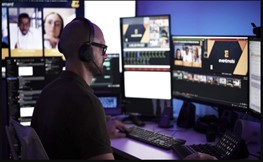
These aren’t always technology problems. They’re execution problems. That’s why high-visibility communications environments often benefit from managed support rather than purely self-service tools.
Planning the Environment Before the Event Begins
One of the most important aspects of supporting mission-critical communications is preparation.
Whether the event involves an operator-assisted call, a webcast, or a large virtual event, the success of the experience is often determined before the audience ever joins.
During the planning phase, several important elements are addressed:
- Understanding the purpose of the communication
- Identifying presenters and participants
- Designing the flow of the event
- Coordinating entry methods for speakers and participants
- Aligning operator moderation or event support
- Confirming recording or replay requirements

For investor calls, this may involve coordinating speaker access lines and preparing for moderated Q&A.
For virtual events and webcasts, it may include presentation testing, streaming validation, and audience access coordination.
For hybrid environments, it often means ensuring both in-person and remote audiences experience the event seamlessly.
Organizations planning larger virtual or hybrid experiences often rely on hybrid and virtual event solutions that combine streaming, moderation, and audience engagement tools into a structured environment.
These preparations significantly reduce the risk of disruption when the event begins.
When everyone understands the flow of the communication ahead of time, the live experience becomes far smoother.
Operator-Assisted Calls: Structured Communication When the Stakes Are High
Despite the growth of automated conferencing platforms, operator-assisted calls remain one of the most reliable ways to manage high-visibility communications.
Many organizations continue to use operator-assisted conference calls for situations such as:
- Earnings announcements
- Investor briefings
- Legal proceedings
- Board communications
- Corporate announcements
In these environments, the operator acts as a live coordinator for the event.
They help manage:
- Participant entry
- Speaker introductions
- Q&A moderation
- Line management
- Real-time troubleshooting

This structure ensures that even large calls remain organized and professional. It also allows presenters to focus entirely on delivering their message rather than worrying about managing logistics.
For organizations hosting investor communications or large corporate calls, this type of structured moderation helps maintain the credibility and professionalism expected by their audiences.
Teams preparing for these environments often follow best practices similar to those outlined in running a flawless operator-assisted event call to ensure the event flows smoothly from start to finish.
Webcasts and Hybrid Events: Expanding the Audience
Many organizations are expanding beyond traditional conference calls to reach broader audiences through webcasts and hybrid events.
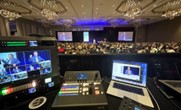
These environments allow companies to deliver presentations, share visual content, and connect with global participants in real time.
- A typical webcast environment may include:
- Live audio or video presentation
- Slide presentation broadcasting
- Global streaming access
- Integrated Q&A tools
- Recording and replay access
Hybrid events expand this concept further by combining live audiences with virtual attendees. While these formats offer greater reach and engagement, they also introduce additional complexity.
Audience sizes grow.
Participants join from different regions and time zones.
Multiple presentation platforms may be involved.
Successfully managing these events requires coordination between streaming platforms, moderation tools, and communications infrastructure. When executed properly, the audience never notices the technology behind the event — they simply experience a smooth, professional presentation.
Cloud Communications Infrastructure: The Foundation Behind Everything
While high-visibility events often receive the most attention, the communications infrastructure supporting an organization day-to-day is equally important.
Modern businesses rely heavily on cloud communications environments to support:
- internal collaboration
- remote workforce connectivity
- customer communications
- conferencing and events
- distributed global teams
These environments evolve over time as organizations grow.
New tools are added.
Teams adopt different platforms.
Infrastructure expands across departments and locations.

Without thoughtful oversight, communications environments can become fragmented and difficult to manage. That’s why many organizations rely on managed cloud communications support that focuses not just on deploying technology, but maintaining a reliable communications environment over time.
Monitoring performance.
Supporting users.
Ensuring systems remain dependable as organizations evolve.
Reliable infrastructure provides the foundation that allows all other communications — including investor calls, webcasts, and virtual events — to operate smoothly.
The Role of Managed Support in Communications Environments
Technology platforms offer powerful capabilities, but they rarely manage themselves.
Successful communications environments require coordination, preparation, and active oversight.
Managed support provides that additional layer of reliability. It helps ensure that:
- Events are properly prepared and tested
- Live communications run smoothly
- Participants receive assistance when needed
- Communications infrastructure remains stable
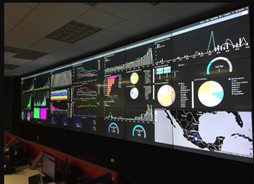
For organizations operating in high-visibility environments, that support can make a significant difference. Instead of reacting to issues in the moment, teams can rely on experienced professionals managing the environment behind the scenes.
The Approach: Execution, Continuity, and Ownership
Supporting communications environments effectively requires more than simply providing access to platforms. It requires a philosophy built around responsibility for the outcome.
That philosophy centers on three principles.
Execution
Every communication event should run smoothly and professionally.
Whether it’s an investor call, webcast, or hybrid event, the audience experience should feel organized, structured, and dependable.
Continuity
Communications environments evolve over time. Organizations grow. Teams change. Technology advances. Maintaining reliable communications infrastructure requires ongoing support and adaptation.
Ownership
When communications are mission-critical, organizations benefit from having a partner who takes responsibility for the environment rather than simply delivering technology.
This ownership mindset ensures that when something important is happening — a corporate announcement, global webcast, or investor briefing — the infrastructure behind it performs reliably.
When Communications Matter, Execution Matters Too
High-visibility communications represent moments where organizations connect with important audiences.
Investors.
Employees.
Clients.
Partners.
The public.
In those moments, reliability and professionalism shape how the organization is perceived.
Technology enables those communications.
But execution ensures they succeed. Supporting these environments — through operator-assisted calls, webcasts, hybrid events, and managed cloud communications — is ultimately about providing organizations with confidence that their message will be delivered clearly, reliably, and professionally.
Supporting Communications That Matter
When communications carry real importance, the infrastructure behind them should never be left to chance.
Whether you’re planning:
- Investor earnings calls
- Corporate webcasts
- Hybrid or virtual events
- Mission-critical communications infrastructure
We provide experienced support to help organizations deliver communications that run smoothly and professionally. Contact Us today to learn more!
